
Report
Event
AIC Days 2025: Event for Junior High and High School Students at Keio University’s Affiliated Schools
2025.08.24 written by Corporate Planning Team
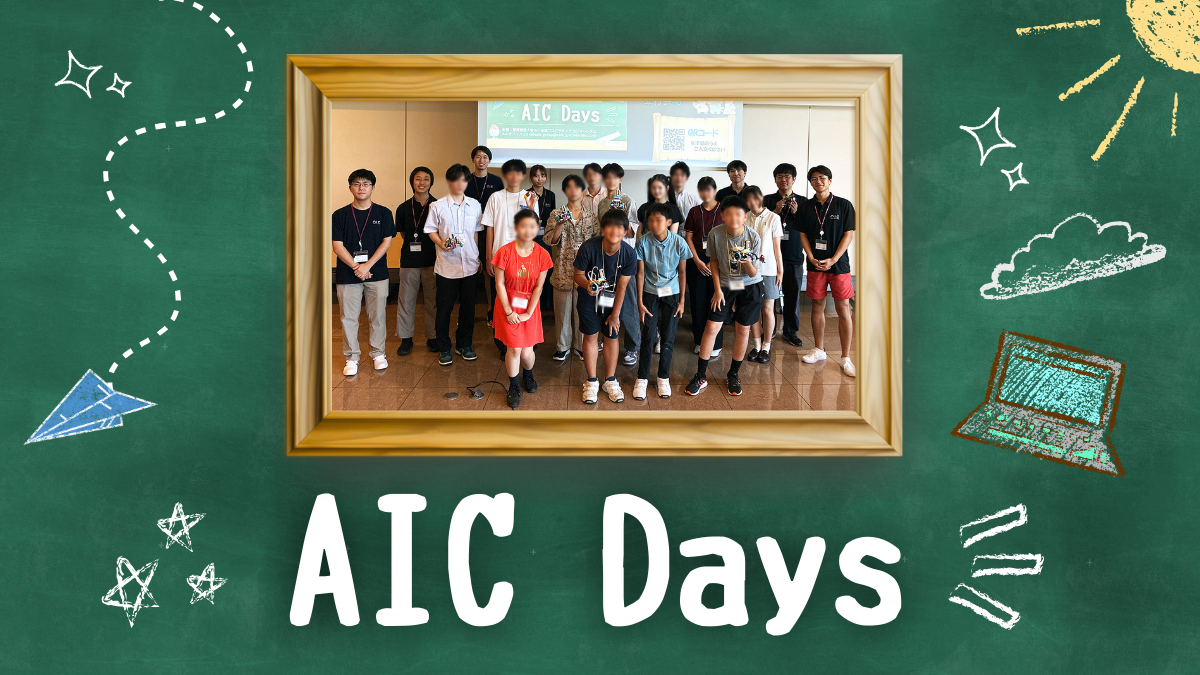
Over the weekend of August 23–24, the AI and Advanced Programming Consortium (AIC) held a special event at Hiyoshi Campus’s AIC lounge within the Kyosei-kan Collaboration Complex called “AIC Days.” The event was aimed at teaching junior high and high school students from Keio’s affiliated schools about artificial intelligence and programming. Keio University students at AIC organized and taught seven different workshops to a total of forty-two junior and senior high school students, who each joined sessions based on their respective skill level and interests.
Introduction to GAS
Twenty-eight junior and senior high school students from Keio’s affiliated schools joined the Introduction to Google Apps Script (GAS) workshop over the course of two days. We designed the program to provide a practical introduction to programming and basic JavaScript syntax using GAS for those with no coding experience.
Workshops at AIC Days generally have one instructor for every two to four students. This allows each student to learn in a relaxed environment and benefit from more individualized attention from us. To further solidify participants’ mastery of the material, Introduction to GAS both explained concepts while also testing their comprehension through practice quizzes.
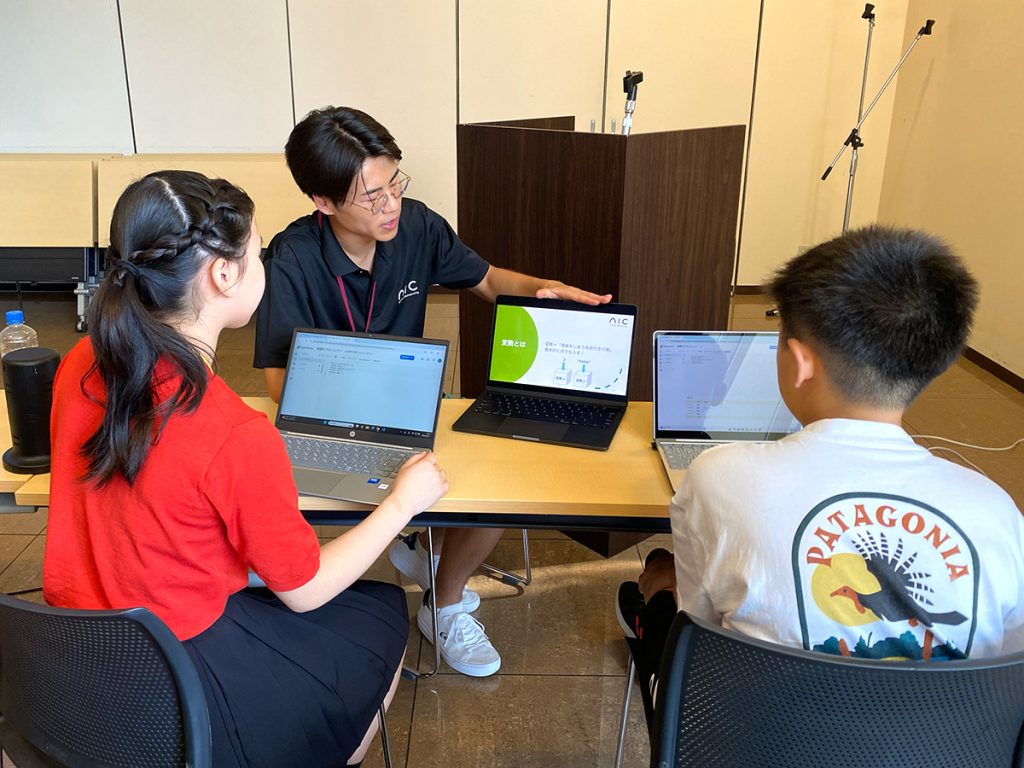
While the first half of the session focused on teaching basic concepts and syntax, the second half gave participants hands-on experience on how programming can be applied in real life situations by utilizing Google Workspace (specifically Google Sheets), where GAS is especially useful.
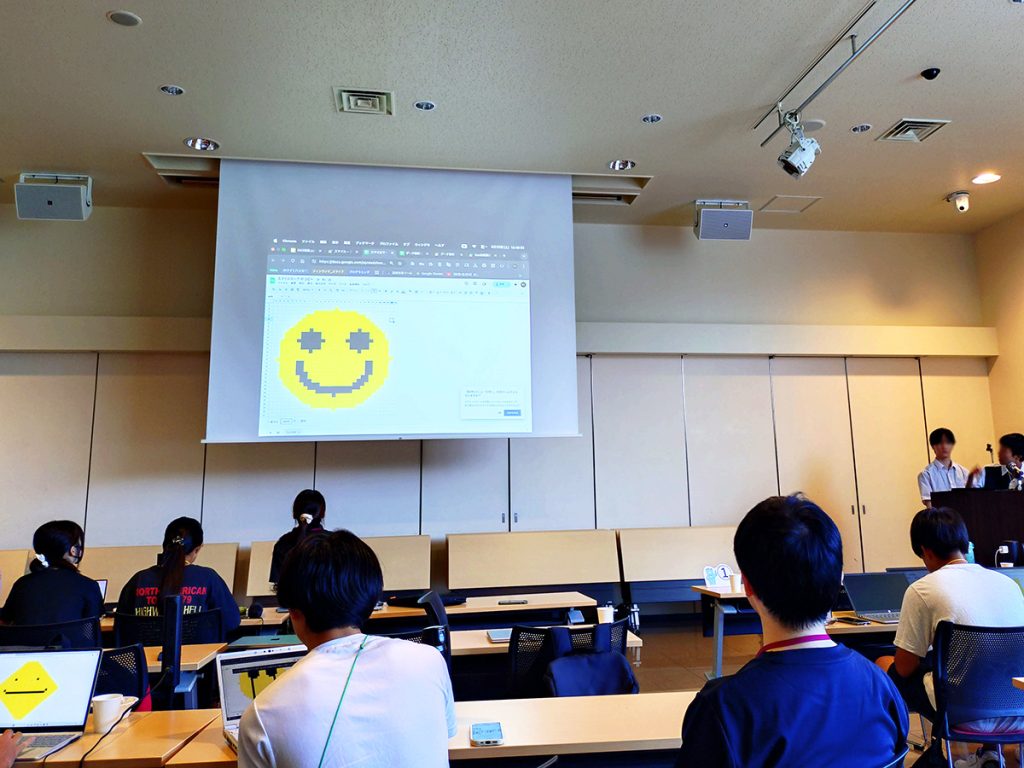
As an example of one of the exercises, we asked participants to draw a smiley face on a spreadsheet using GAS. By adjusting the cells of the spreadsheet so that each forms a square, the students could treat them as pixels and learn up close about two-dimensional arrays and how the images and video information they see on display screens everyday are processed and represented in computers.
In the post-event survey, many participants gave positive feedback, writing, “Programming does not seem as difficult as before, and now I want to continue learning more about it,” and “It was surprising to know that I could manipulate a spreadsheet through programming.” Overall, students seemed very satisfied with the workshop.
However, some respondents also commented that the course was a bit demanding or difficult. Based on the survey responses, we would like to revise subsequent workshops to make them easier to understand and more comfortable for participants who are programming for the first time.
As an instructor, what pleased me the most I was seeing the smiles on the faces of the junior and senior high school students as they worked the program themselves and seeing their sense of accomplishment. I hope that their experience from this workshop will encourage them to continue learning programming and use it as a means to enrich their own lives and society.
Lecturer:
Kosuke Chino
4th year undergraduate student, Department of Information and Computer Science, Faculty of Science and Technology
Introduction to Python
Sixteen participants attended the Introduction to Python workshop, which was its debut as part of AIC Days. We started the session by having the students build a Python environment. This was the first time for many of them to try this, but with the support of our instructors and TAs, they were able to perform this task without issue.
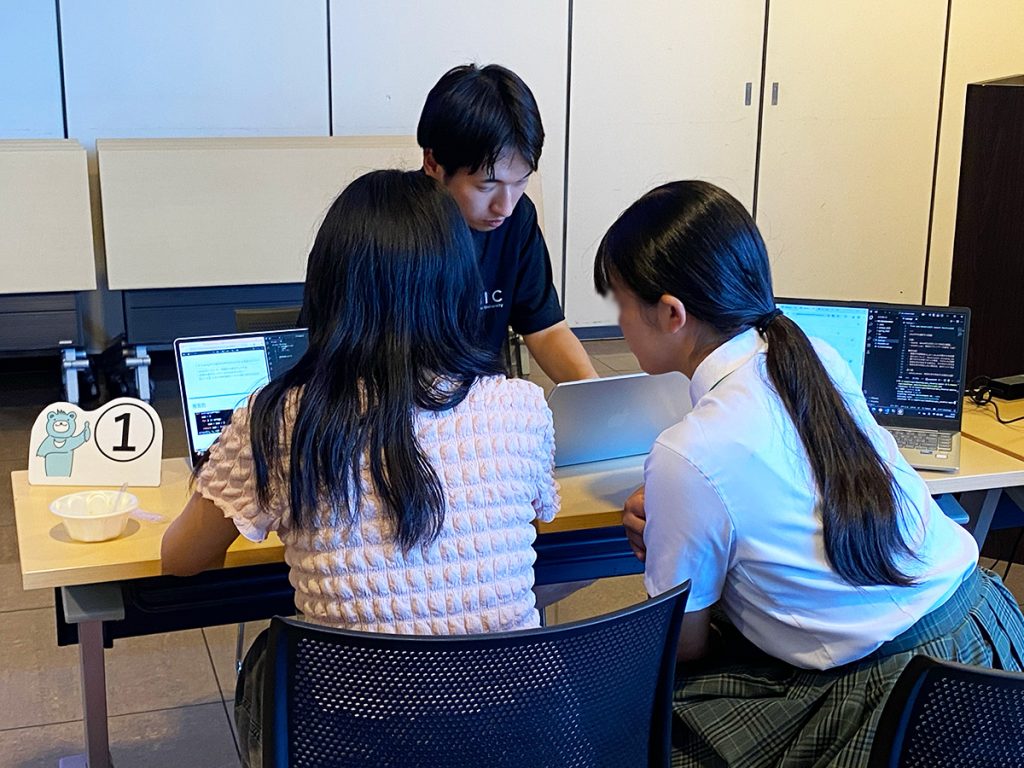
Next, participants learned about basic Python syntax such as variables, conditional branching, and loops. The workshop was designed to be easy to understand even for those with no programming experience, allowing students to learn the basics while actually writing code.
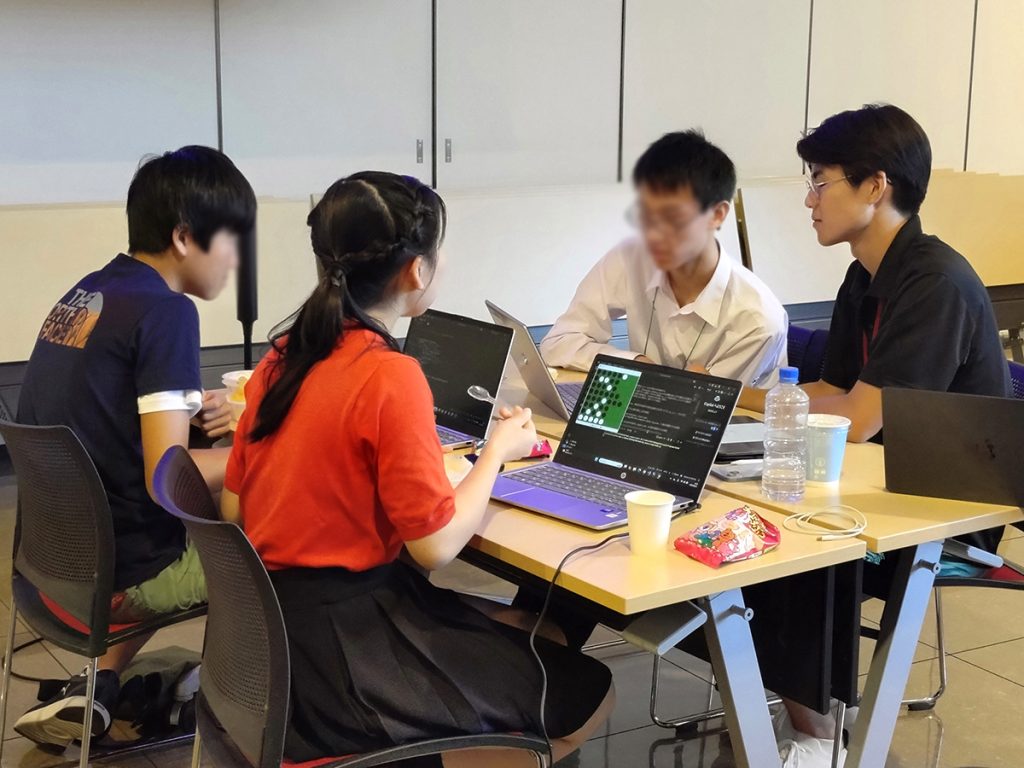
For their assignment, participants worked on developing algorithms for a game of Reversi (the basis for the board game Othello). Participants thought up and implemented algorithms,
- played a game against themselves with said algorithm,
- and played a game against algorithms created by college students at Keio University.
It was impressive to see the participants, while passionately competing against each other, actively share their ideas on how they came up with and improved their algorithms.
Lecturer:
Kento Tokura
First-year master’s student, School of Science for Open and Environmental Systems, Graduate School of Science and Technology
Python + Machine Learning
The Python + Machine Learning workshop, held on the 23rd, gave a broad overview of the topic, from the basics of machine learning to its applications.
Due to the growing importance of artificial intelligence, this workshop was designed to deepen understanding of AI technologies, especially in the subfield of reinforcement learning, which trains software to make optimal decisions. The first half of the session was a lecture that introduced the least squares method, a statistical technique used in regression analysis, as the foundation of machine learning. Students also learned about the basic workings of deep learning and reinforcement learning. We also gave a lecture on the overall framework of machine learning, giving an intuitive explanation of the topic with mathematical formulas.
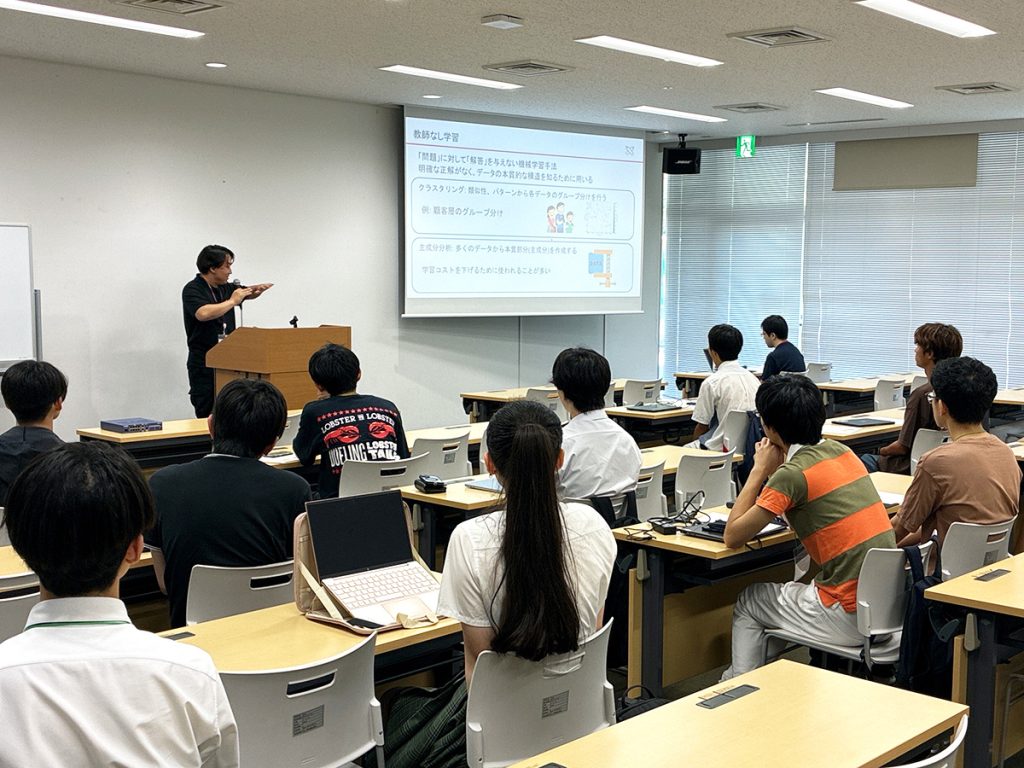
Towards the middle of the session, participants tried their hands at coding basic Python scripts using the JupyterHub environment provided by AIC. The lesson was designed so that even beginners could write code and tackle Python basic syntax such as variables and loop processing, as well as simple data processing, without difficulty.
In the second half of the session, the students applied their newfound knowledge in an exercise using the popular video game Super Mario Bros. Participants observed how the titular character moves through adjustments in the reinforcement learning parameters, such as learning rate and search rate. They were thrilled to see Mario making progress in the stage little by little and behaving in unexpected ways.
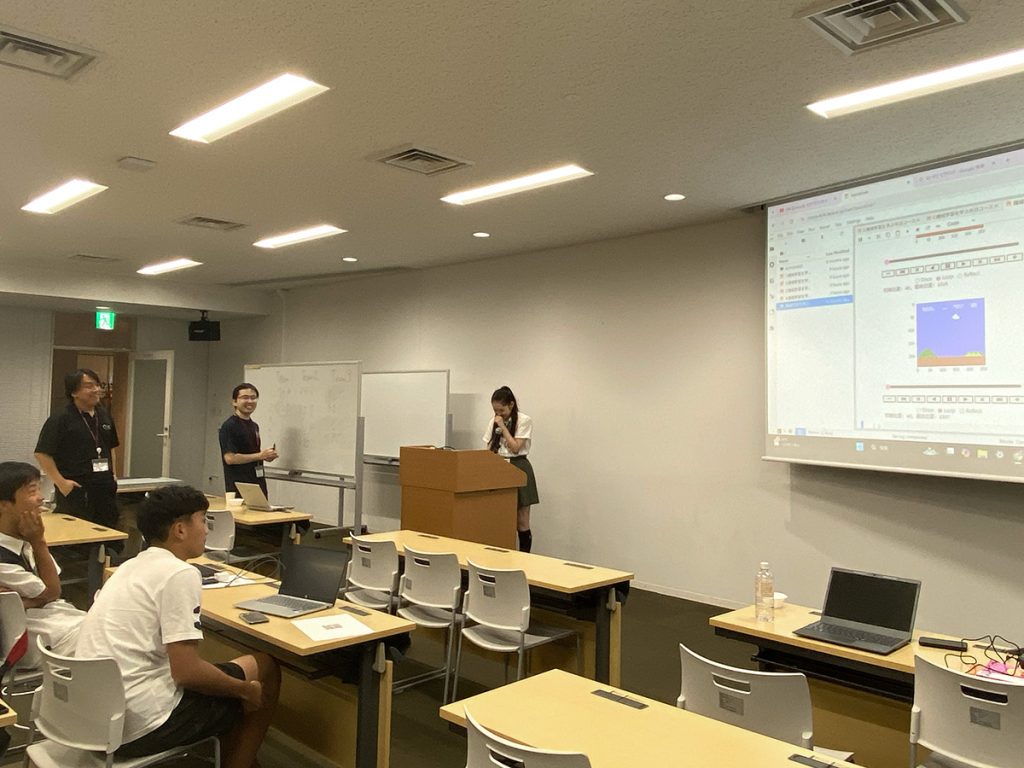
They gave positive feedback in the post-event survey, commenting, “I was able to experience AI firsthand with my own eyes and deepen my understanding of the topic,” and “It was a fun way to learn using Mario.” In the end, this was a valuable opportunity for participants to experience how machine learning and reinforcement learning work through both the lessons and hands-on exercises, and how interesting they can be.
AI’s role in society is expected to grow more and more. We hope that this workshop will serve as a catalyst for further learning for the students.
Lecturers:
Kanato Takeuchi
Second-year master’s student, School of Fundamental Science and Technology, Graduate School of Science and Technology
Hirotada Sugimoto
First-year doctoral student, School of Science for Open and Environmental Systems, Graduate School of Science and Technology
LEGO×Python
The LEGO x Python workshop held on the 24th was a hands-on course designed for students to make their own basic robots and control them using Python coding. The “LEGO Education Spike,” an educational kit, was used to teach the basic principles of robotics.
During the first half of the session, students followed instruction pamphlets to assemble their robots from LEGOs. Afterwards, they learned how to use distance sensors, color sensors, and motors with Python, allowing them to understand the basics of how to make the robots actually move.
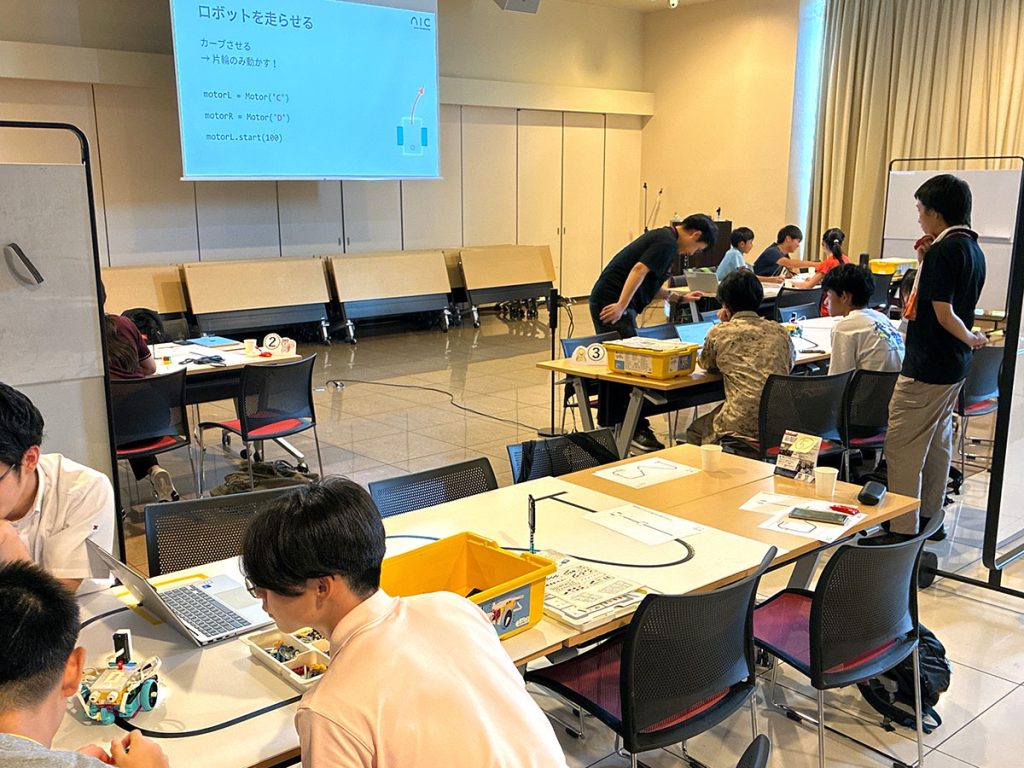
The mission was a disaster relief scenario in which the robots had to follow a predetermined route that was marked with a line, navigate around obstacles, retrieve blocks that represented emergency provisions, and successfully deliver them to their intended destination.
Each group came up with their own ideas for the mission, making improvements along the way to gradually increase their robot’s traveling distance and reach the destination. The programs and robots showcased each group’s uniqueness, and despite being allotted less than one hour of time for developing them, the participants were all able to create highly sophisticated robots. This year marked the third iteration of this workshop, and every time it generates fresh new ideas, inspiring even us as lecturers to learn something new. For this round, we were particularly impressed by the flexibility in thinking the students displayed. For example, many teams were quick to design ways to accelerate at the start of the race when there was a straight section.
The workshop concluded with a contest in which each group competed on a point system to see how well they accomplished their mission and presented their results. The robots encountered a lot of difficulties along the way, such as going off course, returning to the starting line in reverse, and having trouble grabbing relief supplies. However, the participants were able to correct these within the time limit, and the room lit up with excitement when they reached the goal.
Japan is facing a labor shortage, and the demand for professionals who can develop robots will likely increase in the future. One student commented, “It was the first time for me to try running things in Python, and it was great to broaden my programming horizons.” We hope that students will continue to deepen their learning not only on the screen, but also at the physical level, by actually moving things around.
Lecturers:
Hiroshi Yoshikawa
First-year master’s student, School of Science for Open and Environmental Systems, Graduate School of Science and Technology
Kohei Wada
First-year master’s student, School of Science for Open and Environmental Systems, Graduate School of Science and Technology
Intermediate and Advanced GAS (GAS + Python)
On the afternoon of the 24th, the GAS Intermediate and Advanced (GAS + Python) workshop was held as part of the AIC Days program for the first time, bringing in three participants. This workshop aimed to give a multidimensional approach to the inner workings of web app development by creating a game of Reversi that can be played online.
The first half consisted of a lecture that introduced the concept of server and client, the foundation of web apps, and their respective processing and communication mechanisms. We used intuitive teaching methods, giving examples such as Google’s actual web apps and the Reversi game that would be the main focus of this session.
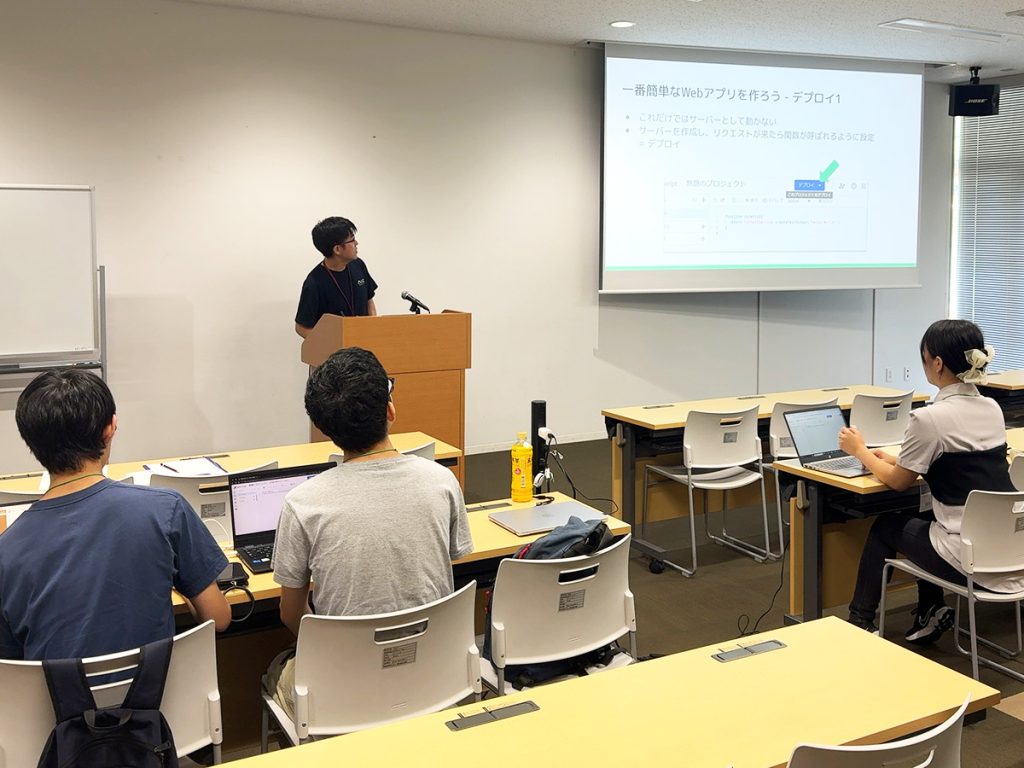
In the following hands-on section of the workshop, the participants learned how to use GAS for the server side and Python for the client side, practicing also how to link the two together.
For their last task, the students applied everything they had learned up to that point to add an online match function to their game. The workshop emphasized independent thinking from participants as they implemented and tested their ideas on what information to transmit and how to process them. Ultimately, all the participants were able to produce their own online game.
Lecturer:
Kohei Wada
First-year master’s student, School of Science for Open and Environmental Systems, Graduate School of Science and Technology
Intermediate and Advanced GAS (GAS + AI)
Another workshop held on the afternoon of the 24th was the Intermediate and Advanced GAS workshop focusing on GAS and AI, which had ten participants. This was designed to be the applied extension of the Introduction to GAS workshop held in the mornings of the 23rd and 24th, and aimed to challenge participants to develop their own original AI chatbot by combining ChatGPT’s API with LINE chatbots while applying the GAS knowledge and syntax they learned in the introductory course.
The first half of the session showed students how to call the ChatGPT API from GAS to interact with AI and gave them the chance to experience conversing with AI chatbots while writing their own code. They then linked the official LINE account with GAS to create an environment in which users can talk with the bot they created on their smartphones. As soon as their programs began to work, the event space filled with awe and triumph.
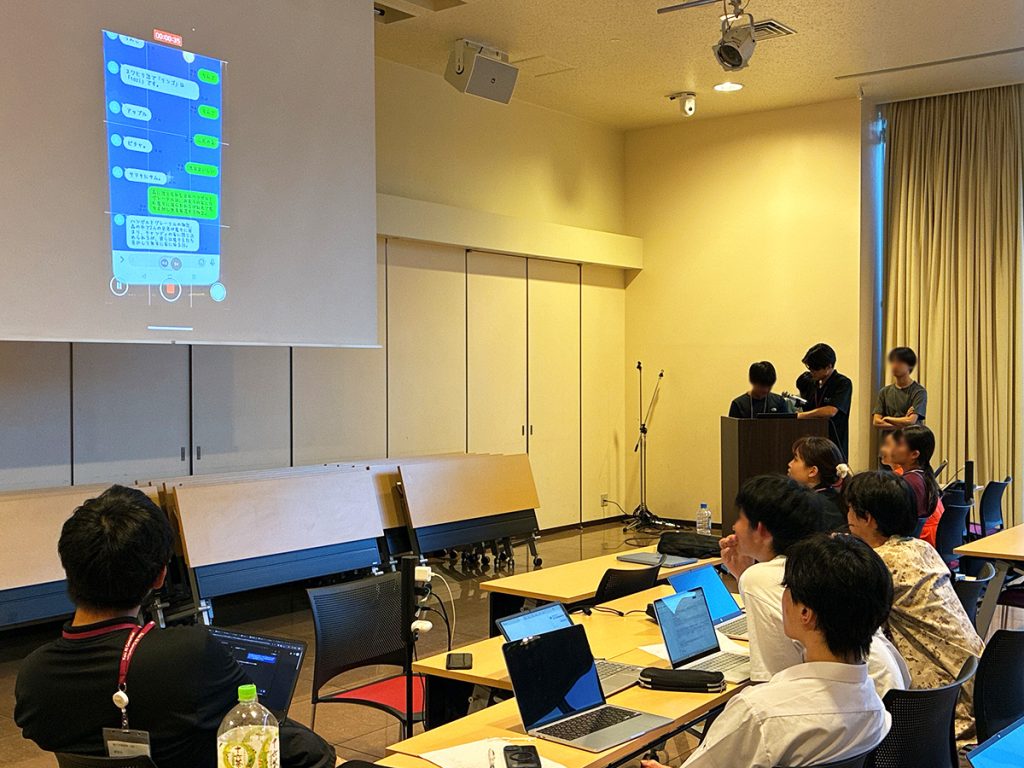
The students then set to work on creating a chatbot that not only uses AI to converse, but also incorporates their own ideas and innovations. There was no time limit to complete this task; rather, they were to think about how to implement their ideas independently. This would help them better understand what’s going on behind web apps as well as the social significance of using AI.
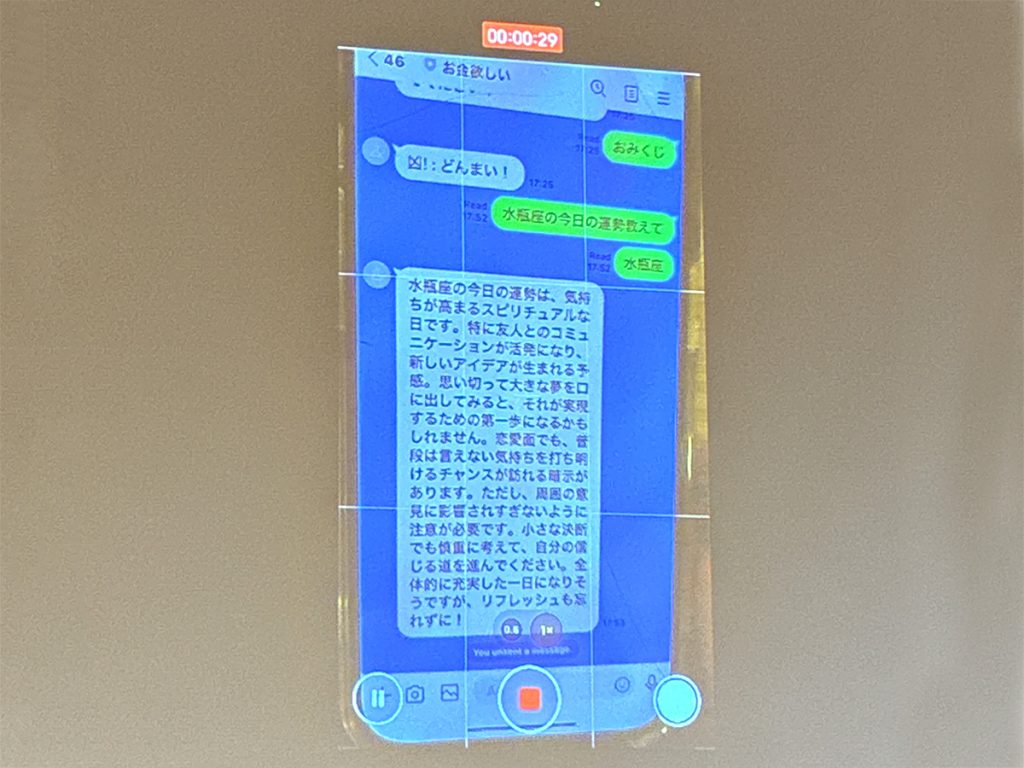
At the end of the session, each student presented what kind of bot they wanted to create, how they would use it, and how far they had come in their development. It was immensely fun for all the participants, who generated and presented many unique ideas and innovations. Participants were able to learn firsthand that by combining AI and GAS, they can build their own systems that are useful for daily life and learning, and even apply it to society as a whole.
In the post-event survey, we received comments such as “I was surprised to learn how versatile GAS and LINE can be,” and “Even though I’m just a beginner at programming, I gained confidence in my ability to create useful applications using AI.” All participants expressed their satisfaction with the workshop, responding with a 100% satisfaction rate.
We hope that the experience at AIC Days will deepen the participating junior and senior high school students’ interest in AI and programming, and that they will use it as a tool to improve society and become pioneers in the AI age.
Lecturer:
Kosuke Chino
4th year undergraduate student, Department of Information and Computer Science, Faculty of Science and Technology
Introduction to Data Science
Twenty-three students participated in the Introduction to Data Science workshop held throughout the 24th.
This workshop was designed to have participants experience practicing the PPDAC (Problem, Plan, Data, Analysis, and Conclusion) cycle, which is a holistic approach for handling data. The lecture section of the workshop explained why data science is so important today while introducing basic terminology and data analysis concepts. In the exercises that followed, the students learned more practical and complex operations, from basic Excel operations to database operations.
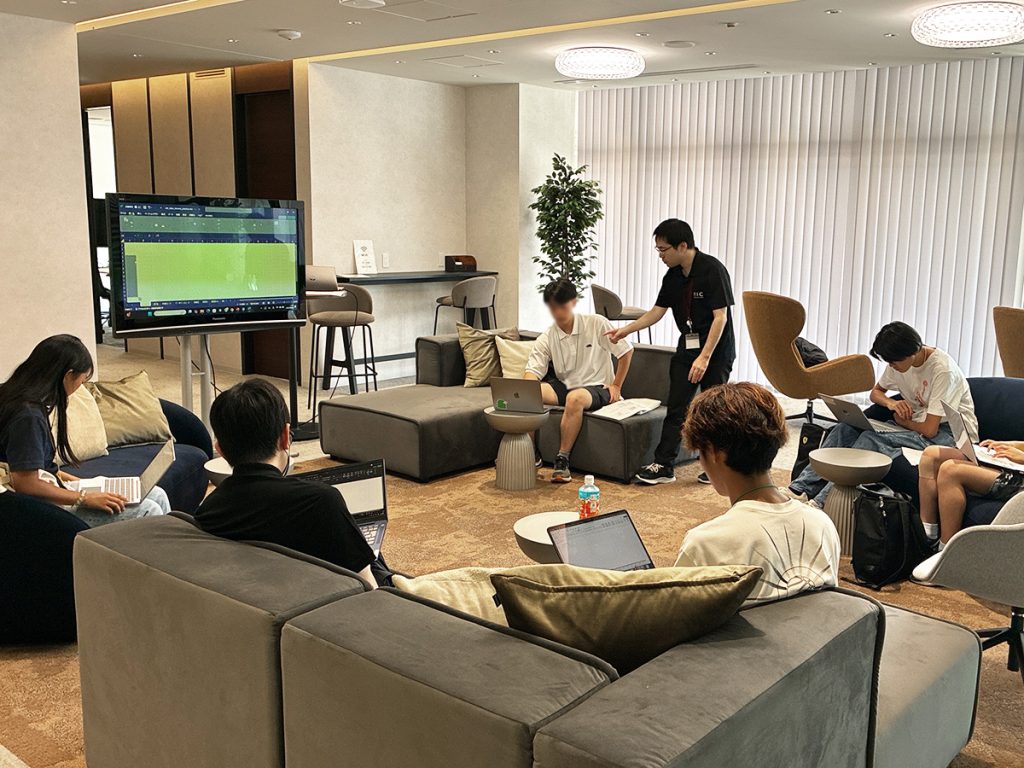
In the latter half of the workshop, we gave participants hands-on experience, dividing them into two groups and tasking them with analyzing data while keeping in mind the PPDAC cycle. The lecturers and TAs monitored each group’s progress and provided advice on how to set themes, analyze the data, and prepare their presentations. We chose this year’s topics with current topics and social issues in mind, such as “How to increase the number of visitors to the World Expo” and “Efforts to reduce CO2 emissions in developed countries.” The participants based their work on real data and in the end submitted highly thought-provoking final proposals.
Although it was a long eight-hour session, students’ interest in statistics and data analysis only seemed to increase. They shared a lot of positive feedback saying, “It was fun to set a topic from scratch and think as a group about how it could be improved while utilizing Excel,” and “I don’t usually work in a group to create something in a short period of time, so it was very refreshing and enjoyable.”
We will continue to provide opportunities for junior and senior high school students to experience the fun of data science and its connection to society through these hands-on programs.
Lecturer:
Hirotada Sugimoto
First-year doctoral student, School of Science for Open and Environmental Systems, Graduate School of Science and Technology
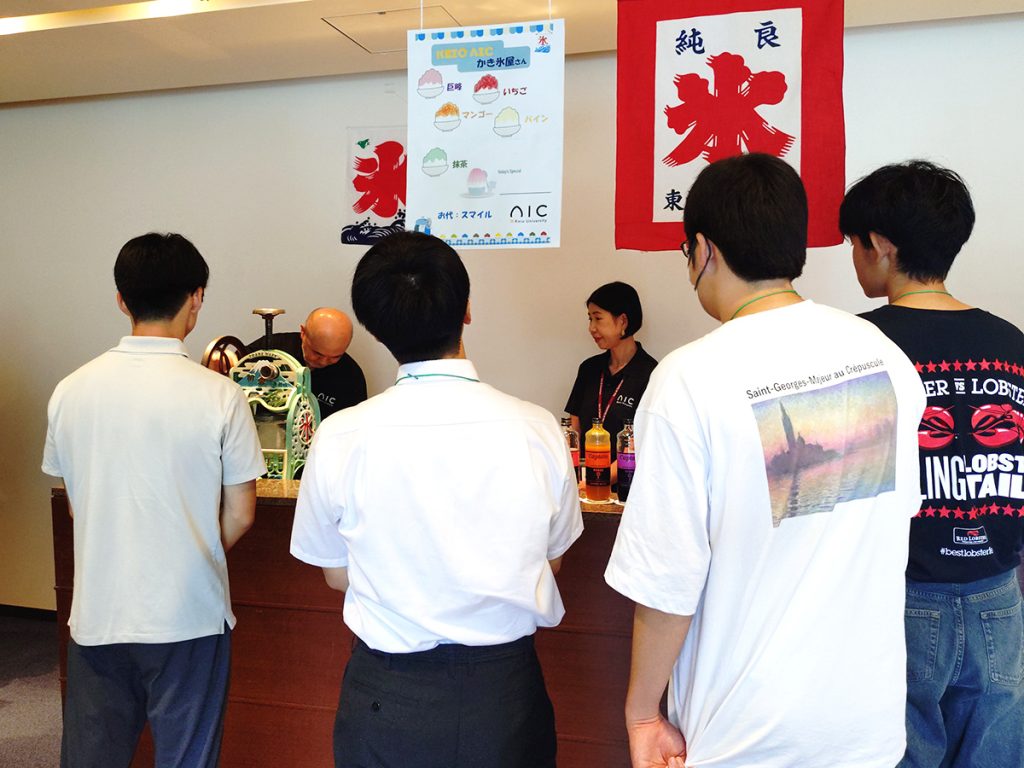
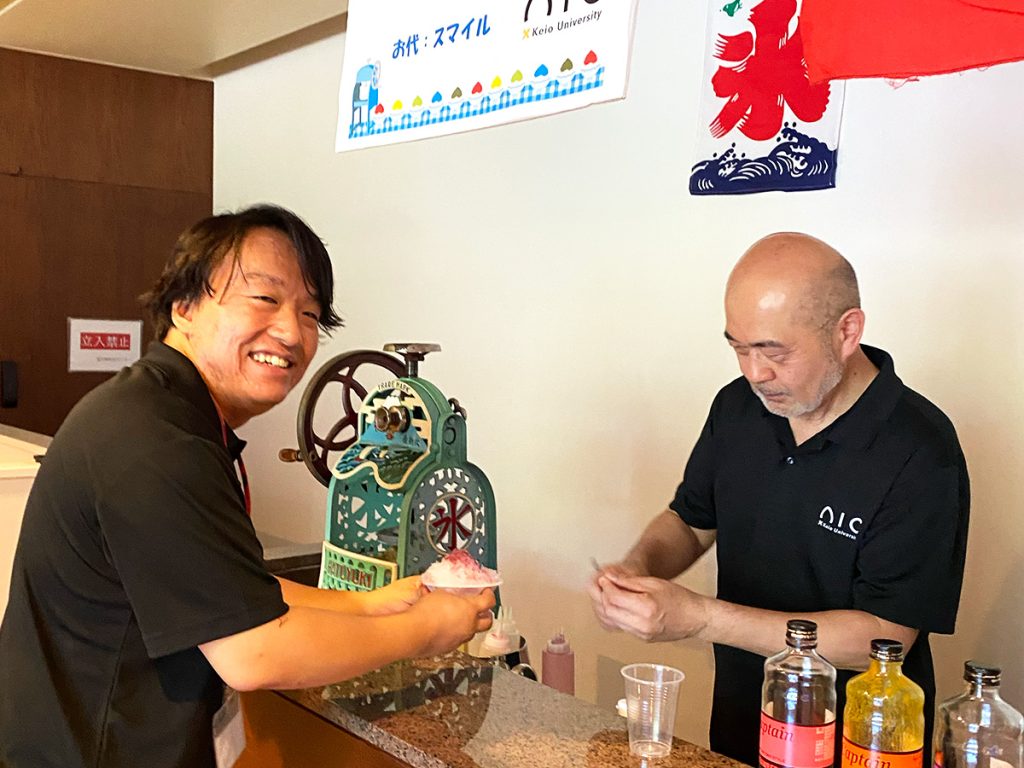
Participants also loved the special shaved ice served during breaks.
We hope that the AIC Days event that ran through these two days will deepen communication among Keio’s affiliated school students, remain in their memories as an immensely fun time during their summer vacation, and serve as an opportunity to deepen their learning of AI and programming in the future.