

- EN
- JP
Report
Event
AIC Holds 2025 AI Insights Summit
2025.07.15 written by Corporate Planning Team
On July 15, 2025, AIC held the 2025 AI Insights Summit at the Kyoseikan Collaboration Complex on Hiyoshi Campus.
The goal of this summit was to explore the potential of AI to bring about social transformation and to discuss multiple perspectives about the forefront and future prospects of AI technology.
Part 1: Lecture
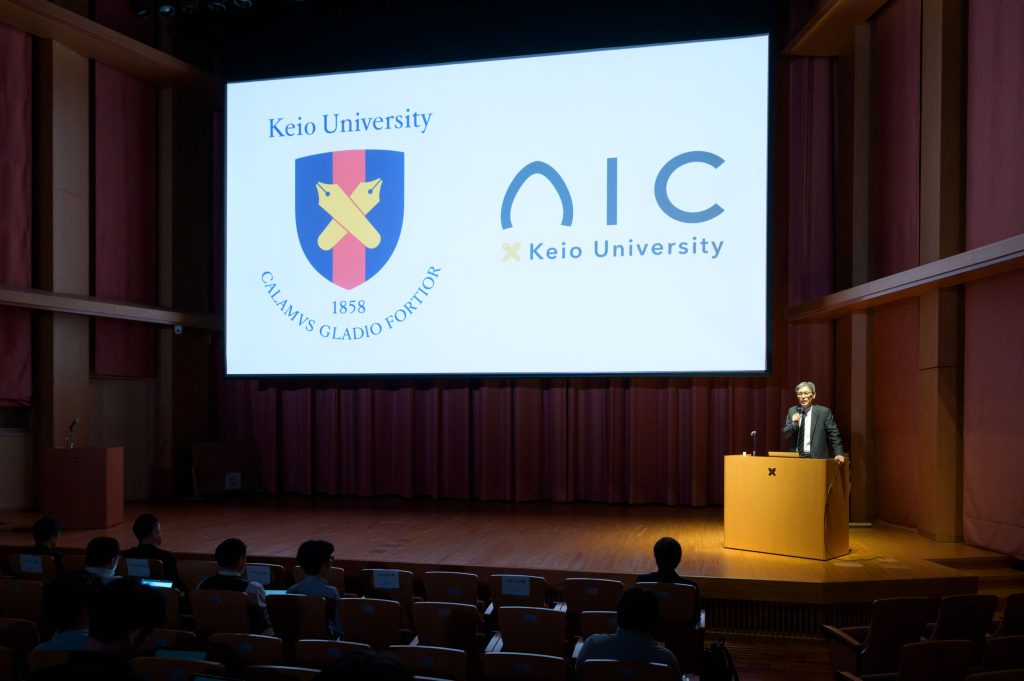
Opening Remarks
The event kicked off with opening remarks by Keio University President Kohei Itoh.
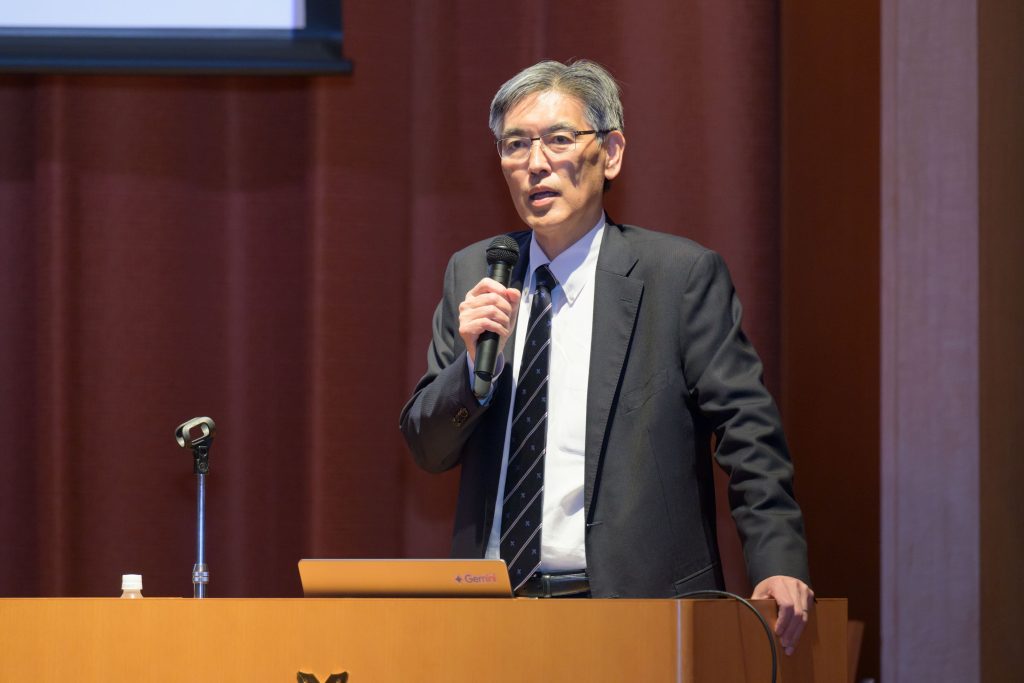
President Itoh emphasized the importance of education in the fields of AI and programming as he traced the history of how the AI and Advanced Programming Consortium (AIC), the organizer of this event, was founded. He also touched on the significance of continuously creating opportunities for students to come into contact with and take an active interest in cutting-edge technology.
Keynote Speaker: Hiroyuki Koike (Managing Director, Google Cloud Japan)
This was followed by a keynote speech by Managing Director Hiroyuki Koike from Google Cloud Japan.
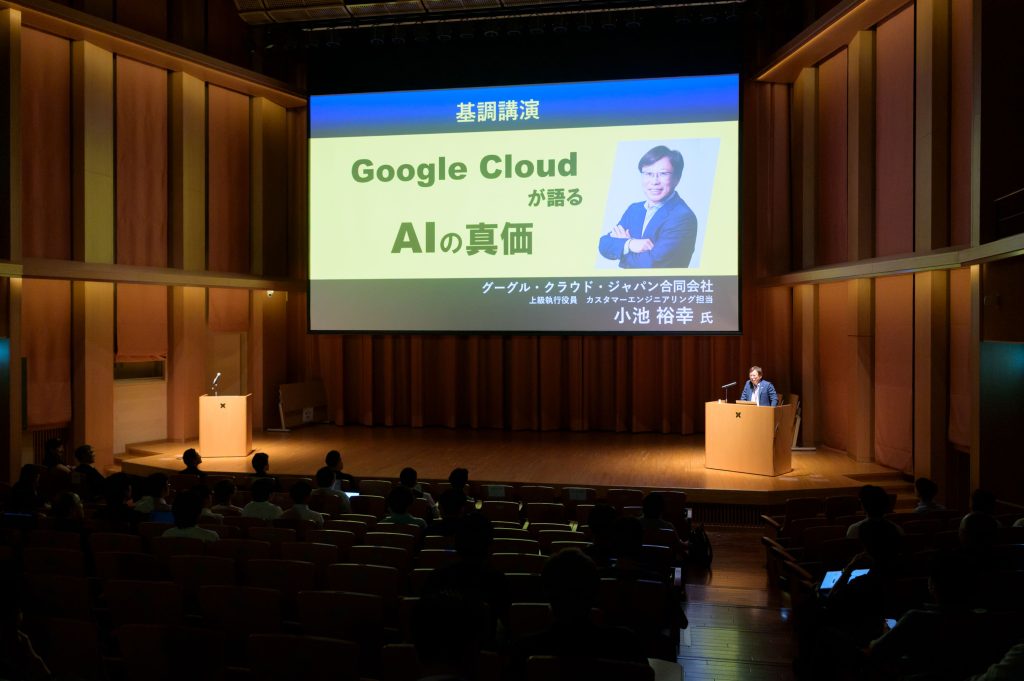
Koike referenced Google’s mission statement, which is “to organize the world’s information and make it universally accessible and useful,” and highlighted that Japan is a strategically important location for Google.
In his speech, he also showcased a range of initiatives that Google is carrying out in Japan.
Some examples include domestic processing support for enhanced security, “Grow with Google”—an initiative that helps people improve their skills through AI learning programs, and Waymo—formerly the Google self-driving car project, which seeks to pioneer the future of mobility through self-driving taxis. He used these examples to illustrate how Google can play an active social role in Japan.
Koike then went on to elaborate on the latest AI technology Google has been pushing. He especially focused on Google’s generative AI, “Gemini,” which is capable of high-performance functions such as multimodal processing (recognition and output of images, video, and audio data), long context support, and media generation in real-time. He also unveiled an AI demonstration based on President’s Itoh research theme, combining Gemini and NotebookLM, to introduce in specific terms the potential applications of generative AI.
Next, he also touched on AI-based code generation and video generation technologies, and shared examples of how corporations leverage generative AI as well as the challenges they face. Koike also suggested that a general-purpose AI that can think, observe, act, and perform repetitions autonomously without human prompts could be developed in the future. This AI will be able to assist in a variety of tasks, thereby potentially making our lives even more convenient.
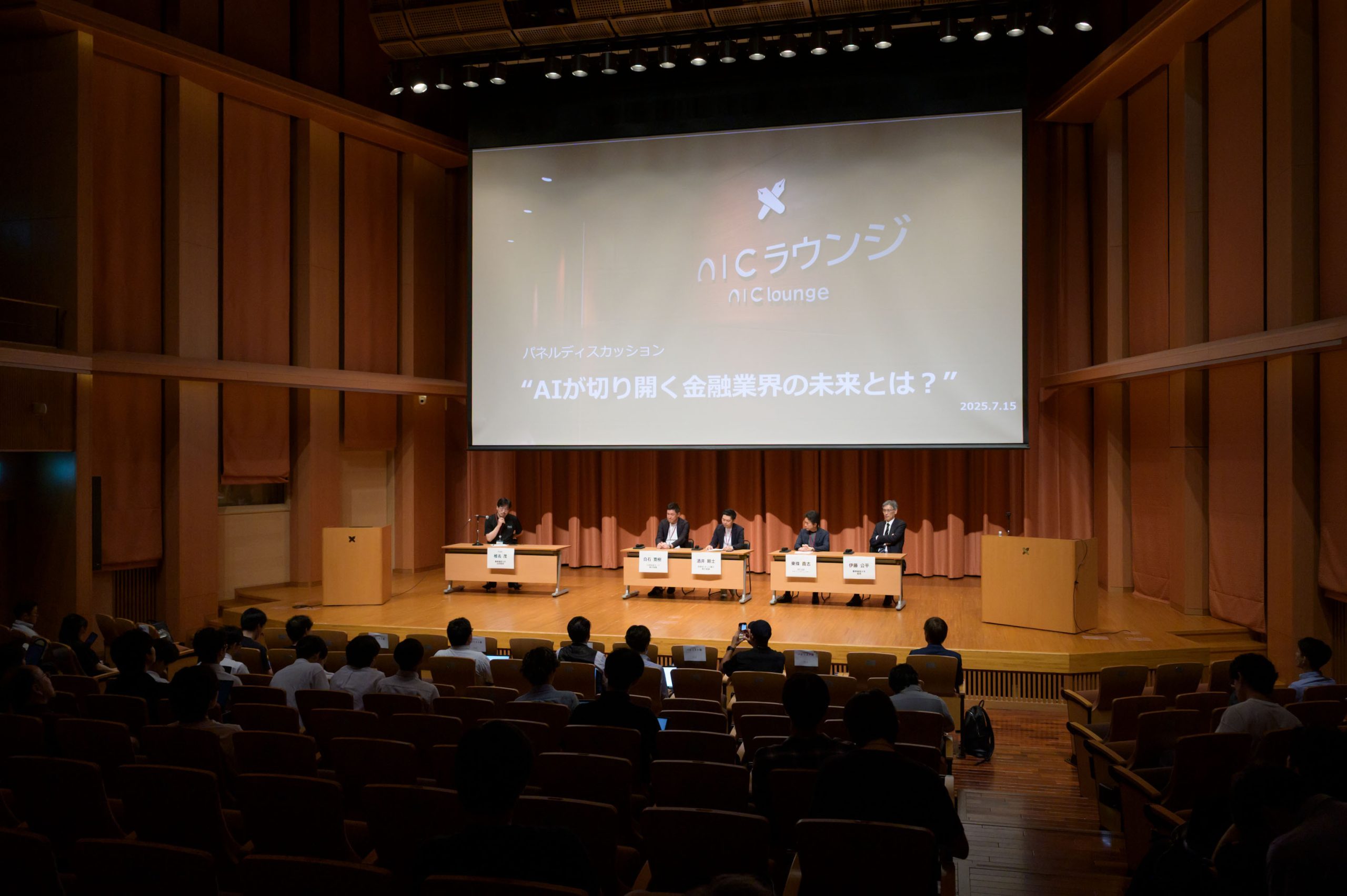
Panel Discussion: What is the Future of the Financial Industry Powered by Generative AI?
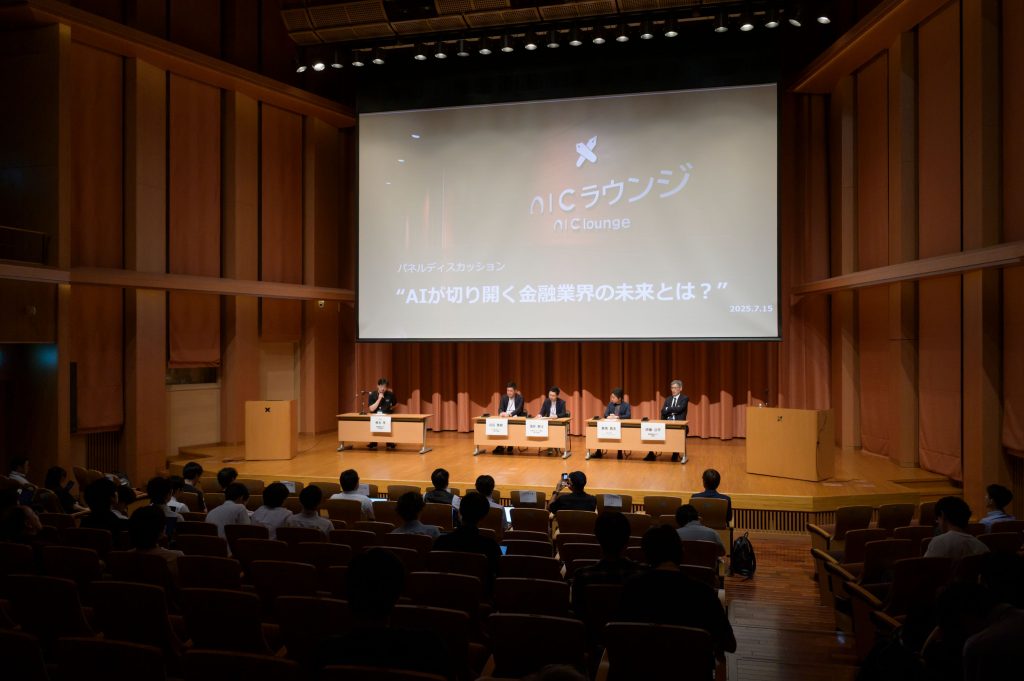
The keynote speech was followed by a panel discussion helmed by leading experts in the financial and consulting industry, moderated by Visiting Professor Shigeru Shiina.
The panelists included the following.
- Hiroki Shiraishi (Executive Officer at Sumitomo Mitsui Card Co., Ltd., Director at Financial Data Utilizing Association (FDUA))
- Takeshi Sakai (Executive Officer at SBI Sumishin Net Bank, Ltd.)
- Takashi Tojo (Managing Director at INTLOOP Strategy)
- Kohei Itoh (President of Keio University)
Application of AI Technology in the Financial Industry
Shiraishi explained that verifying clients’ credit is especially important to credit card companies, and that AI has long been employed in credit screening and other bank operations. He stated that more advanced analysis is now possible through integration with the V-Point Card system and the public transportation network, as well as by consolidating the purchase data of inbound tourists.
Tojo shared that the integration of purchase data with credit card data is something that has been sought by the advertising industry as well. He also presented examples in North America where data on parking lot usage and other sources are being used when making credit evaluations.
Sakai gave an overview of the structure of AI models and the machine learning process during mortgage screenings. He said that they are working on building a more accurate model by linking data with regional banks.
Human Resource and Organizational Challenges Faced when Implementing AI, and Breakthroughs Achieved
The panelists pointed out that the effective use of AI involves not only the technology, but also the ability to ask questions and to set goals, which has become increasingly important.
Speaking based on his own background in the sciences, Shiraishi emphasized the need for talented personnel to serve as intermediaries between the sciences and the humanities.
President Itoh underscored the importance of writing with clarity, composing sentences with logic and causality. He also stressed the need to be able to accurately evaluate and edit AI-generated information, positing that the key to do so lies in “continuous learning in a fair and firm environment.”
Q&A Session
During the Q&A session, participants posed many practical questions from their perspective as practitioners in their respective fields.
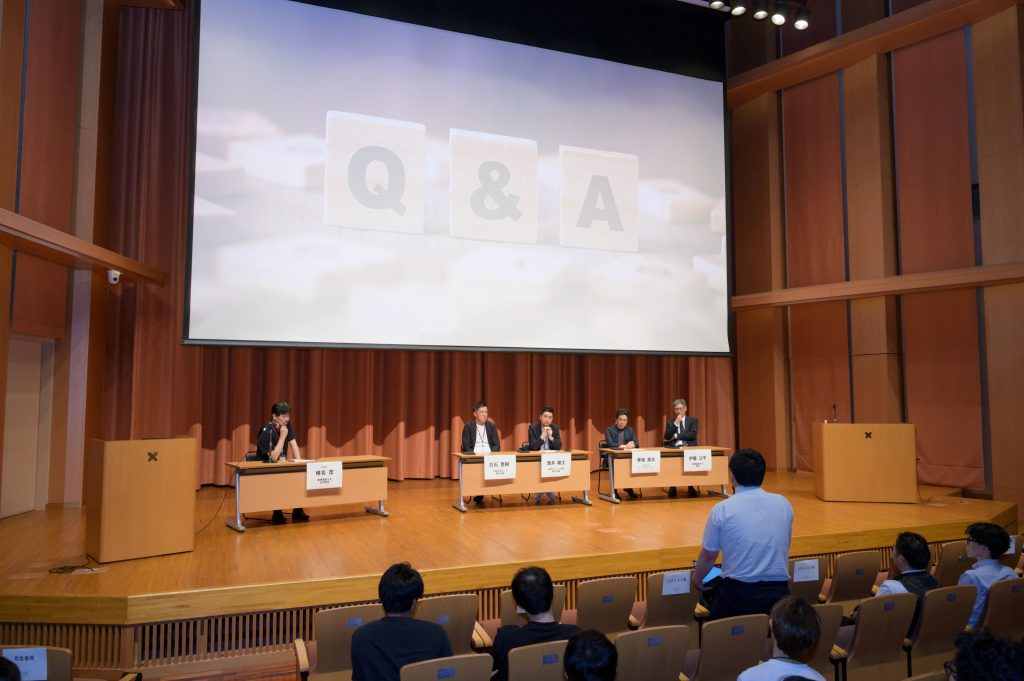
“Which has greater impact on the ground, generative AI or conventional AI?”
Shiraishi noted that while conventional AI has been primarily used for prediction, generative AI has shifted into the domain of application and is advancing with conventional AI through mutual interaction. Generative AI also contributes to fraud detection and other advanced functions.
“Will AI ever deprive people of their ability to think? How do we form a healthy relationship with AI?”
Professor Shiina highlighted the fact that it is us humans who decide what to ask AI and dictate the direction of its investigations.
Sakai mentioned the importance of thinking about “what you find value in,” and President Itoh posited that AI is a tool for “improving oneself” and not for “making things easier.”
“How can we deal with the fact that generative AI is not 100% accurate?”
Shiraishi stated that even humans find it difficult to make flawless decisions, and that it is crucial for us to explain in detail the benefits of introducing AI.
Sakai commented that the key to utilizing AI is to promote its use in fields where a certain margin of error is permissible, and to design effective prompts.
Tojo proposed the introduction of a two-layer checking system as a measure against artificial hallucination (a response generated by AI that contains false or misleading information presented as fact) and said that final decision-making should always be done by a human.
Message to Students
To wrap up the discussion, the panelists offered some words of advice to the students.
- Shiraishi: As the new “AI-Native Generation,” I hope that you will be proactively engaged in effecting social change.
- Sakai: You should choose an environment that allows you to grow and embark on challenges to fulfill your aspirations.
- Tojo: We need to have “human power,” that is, the ability to adapt and respond flexibly to situations, and not simply leave everything to AI.
- President Itoh: In living in an information society, I hope that you will think independently about what an ideal society should be like and act accordingly, including through political participation.
Part 2: Reception
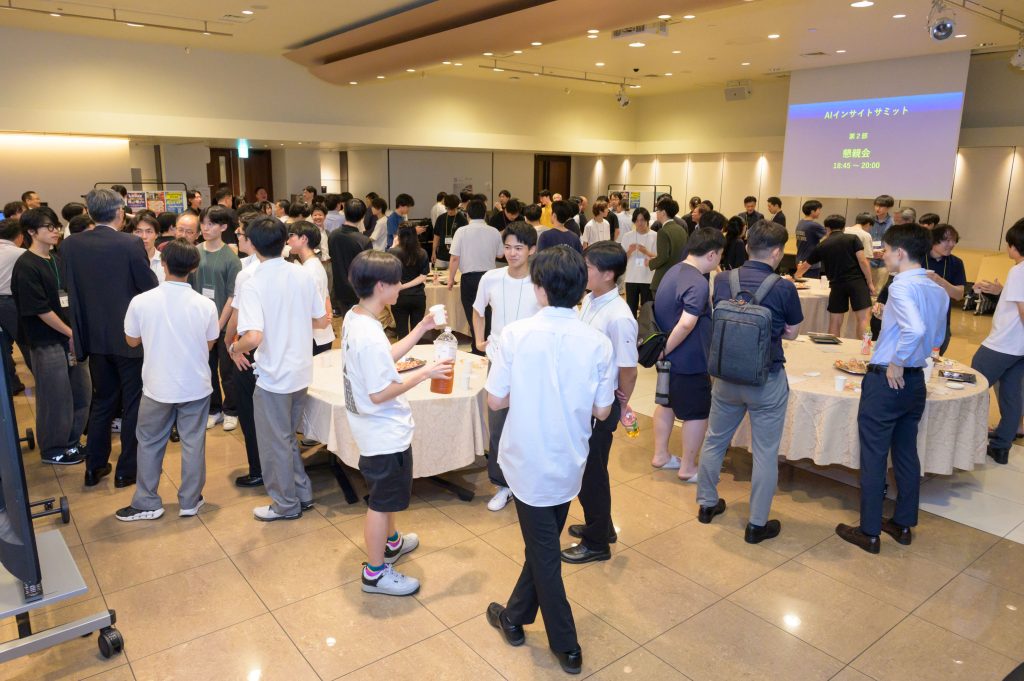
After the lecture, a reception was held in the AIC Lounge.

Students, faculty, staff members, and businesspeople from diverse backgrounds engaged in lively discussions to revisit the topics that were covered in the lecture session.
The AI Insights Summit provided an invaluable opportunity for discussions from multiple perspectives, ranging from cutting-edge generative AI technologies to social implementation, corporate issues, and talent development. AIC would like to express its sincere appreciation to all the speakers and attendees.
Photos: Takeshi Kishi